Sea Story · 6 min read
Meeting the Fried Egg Jellyfish in Corsica
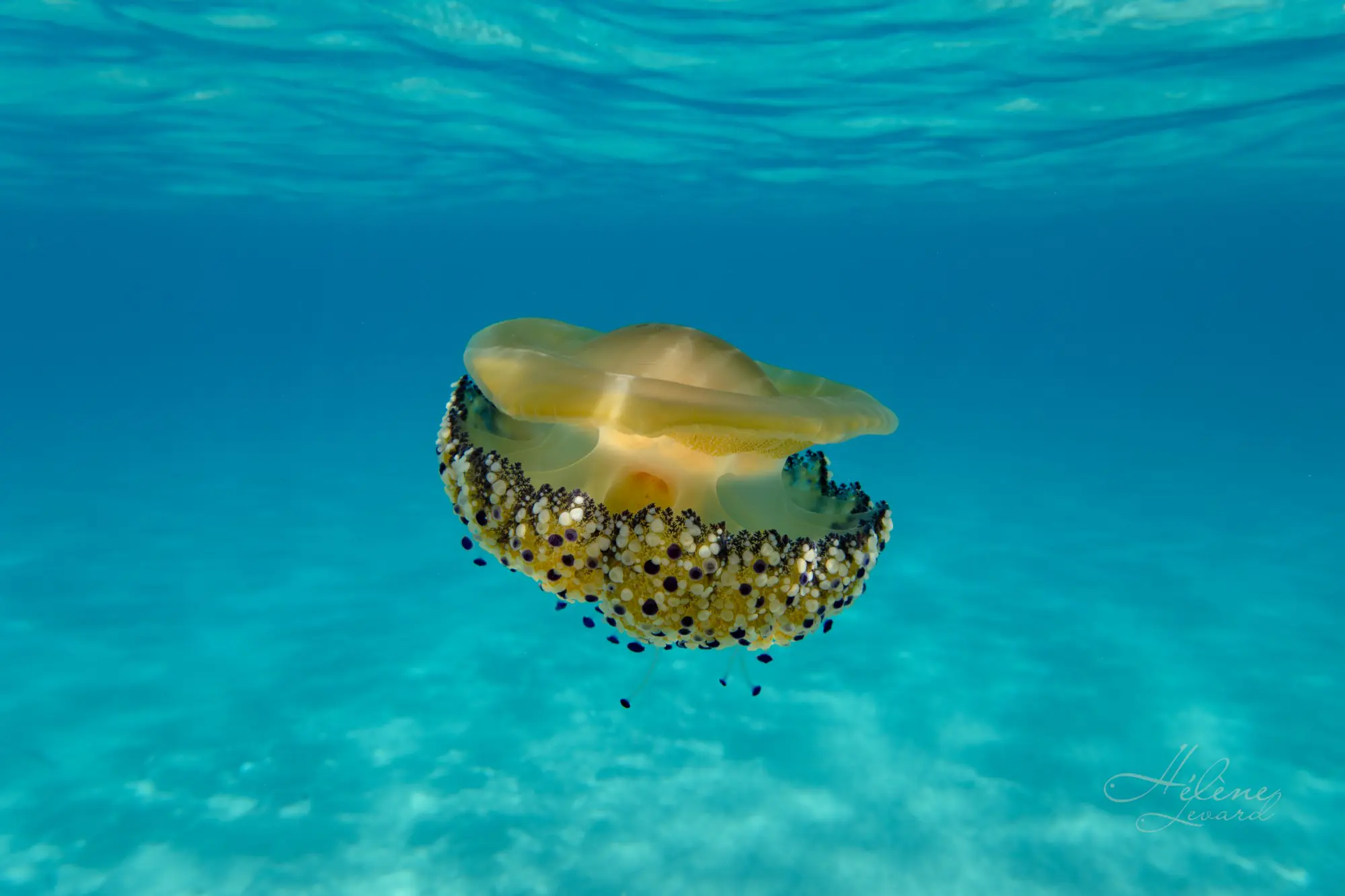
Fried egg jellyfish · Cotylorhiza tuberculata · Corsica
The encounter
Beyond the photograph
2023 · Ostriconi Beach
In 2023, when I decided to move to Corsica, I spent two weeks scouting the island with my cousin. Beyond finding a place to live, I had a dream in mind: to see a fried egg jellyfish for the first time.
I can still picture myself walking down the path under the olive trees to Ostriconi beach, our first beach of the trip. I told my cousin this was THE encounter I dreamed of having in the Mediterranean.
The water was turquoise, and there were about ten of us on a huge beach. It was paradise. Off I went for a swim, without my GoPro, straight out to sea. And there, I saw one! Incredible, after only five minutes! I could not believe my eyes. I took my bearings, then raced back to the beach to fetch my GoPro.
Summer 2026 · At sunset
Three years later, in the summer of 2026, I was finally equipped with my camera and my underwater housing. I was waiting for them.
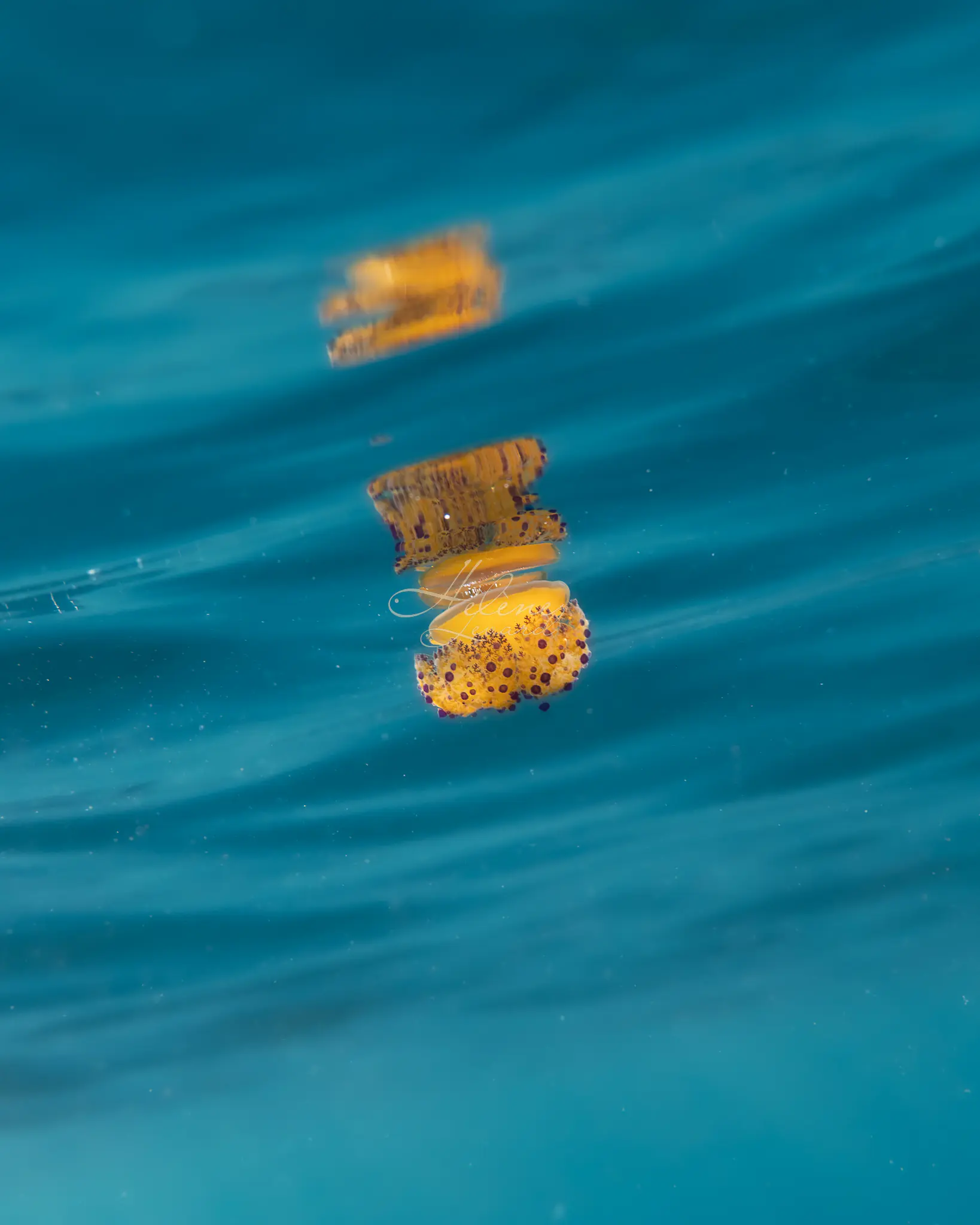
My first encounter came at sunset. It was a baby, barely five centimetres across. Its bell already showed a few nibble marks.
This jellyfish must have drifted in with others, so I decided to swim further out to see if I could find any more. Nothing. I turned back, but then I could not find the jellyfish anywhere. I thought it might have been eaten.
Back home, as I looked through my photos, my suspicion was confirmed. A saddled seabream had already been eyeing it and had taken advantage of my absence to eat it...
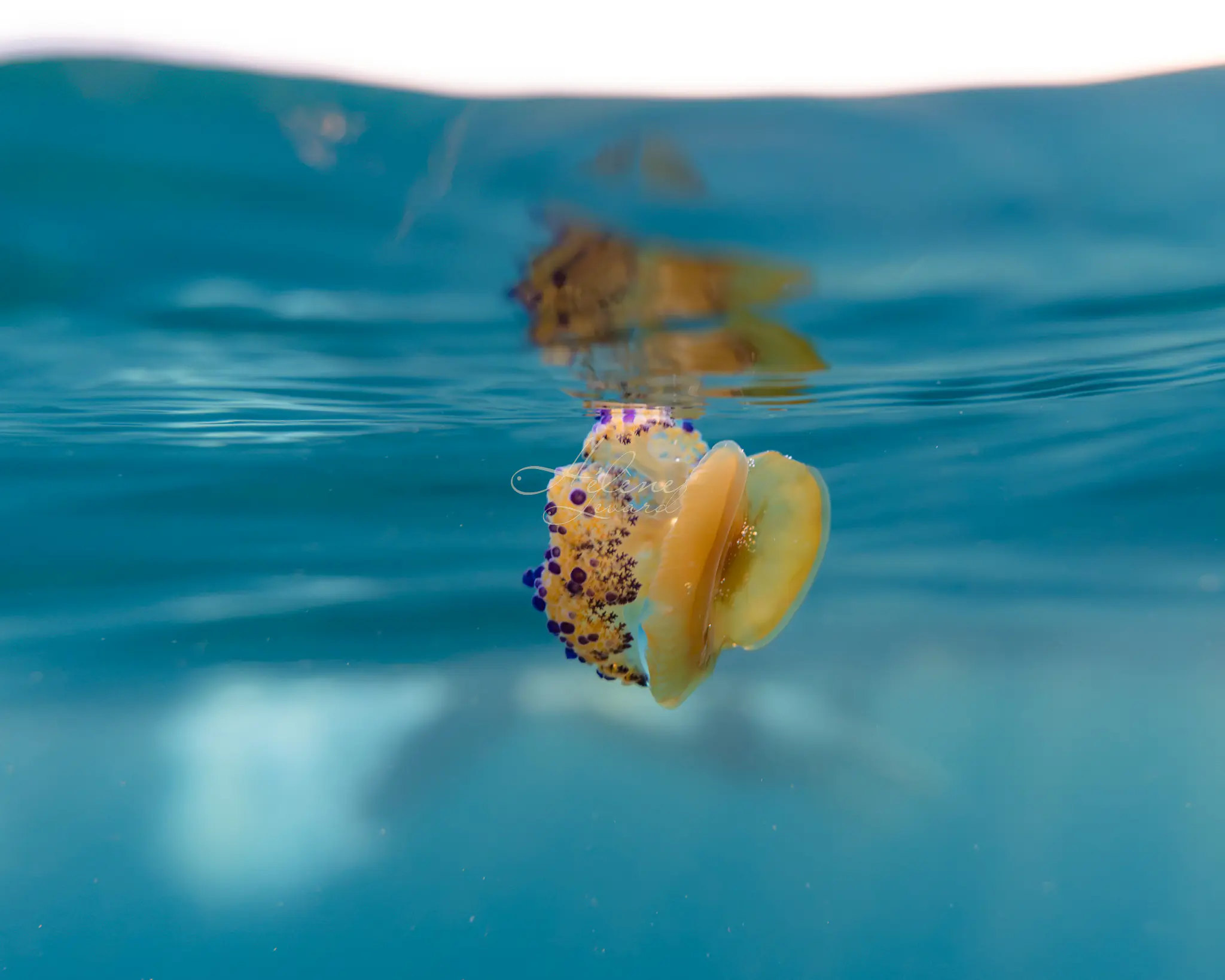
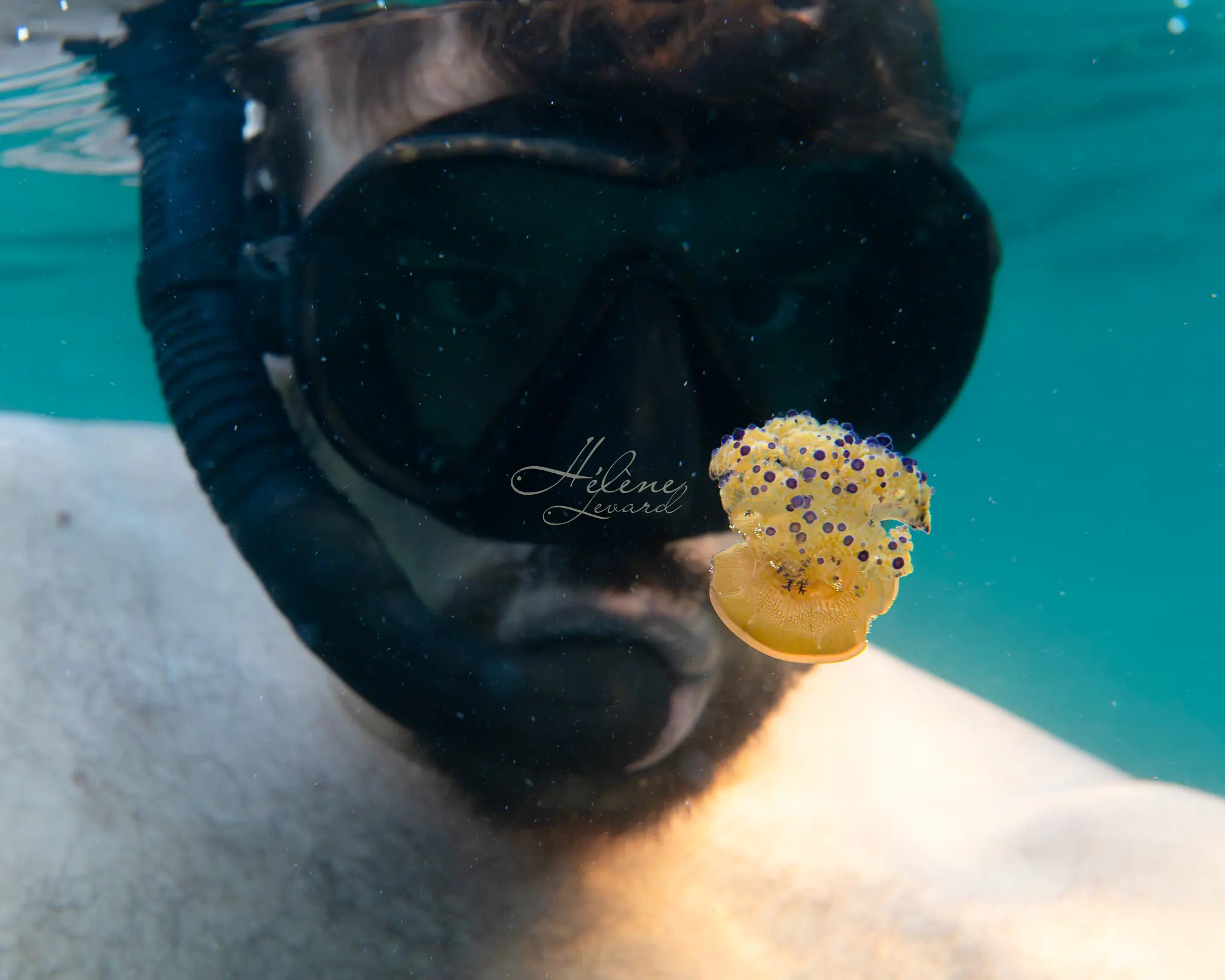
My hope grew. The jellyfish were arriving, carried by a north wind. I was told of sightings at Saleccia beach. Unfortunately, access is difficult, by boat or 4x4. The very next morning, I hit the road for Ostriconi. After all, it is not so far from Saleccia.
I swam for two hours that day, powered by my fins alone. About twenty stingrays and a flying gurnard came to meet me. But still no fried egg jellyfish.
I left exhausted, with twelve kilos of gear in a bag cutting into my shoulder. It was very hot, and I still had a fifteen-minute uphill walk to the car.
Calvi Beach
Then, one morning, while looking for rays on Calvi beach, I spotted one a few metres to my left. I was overexcited, but I took a breath and reminded myself that I had time. What is wonderful about fried egg jellyfish is that they drift slowly. I had time to adjust my settings and photograph it from every angle.
I spent two hours in the water without noticing time pass. It was so magical. I was afraid it would be the only one I’d get to see this summer, and I struggled to make myself leave. I finally got out because I was cold.
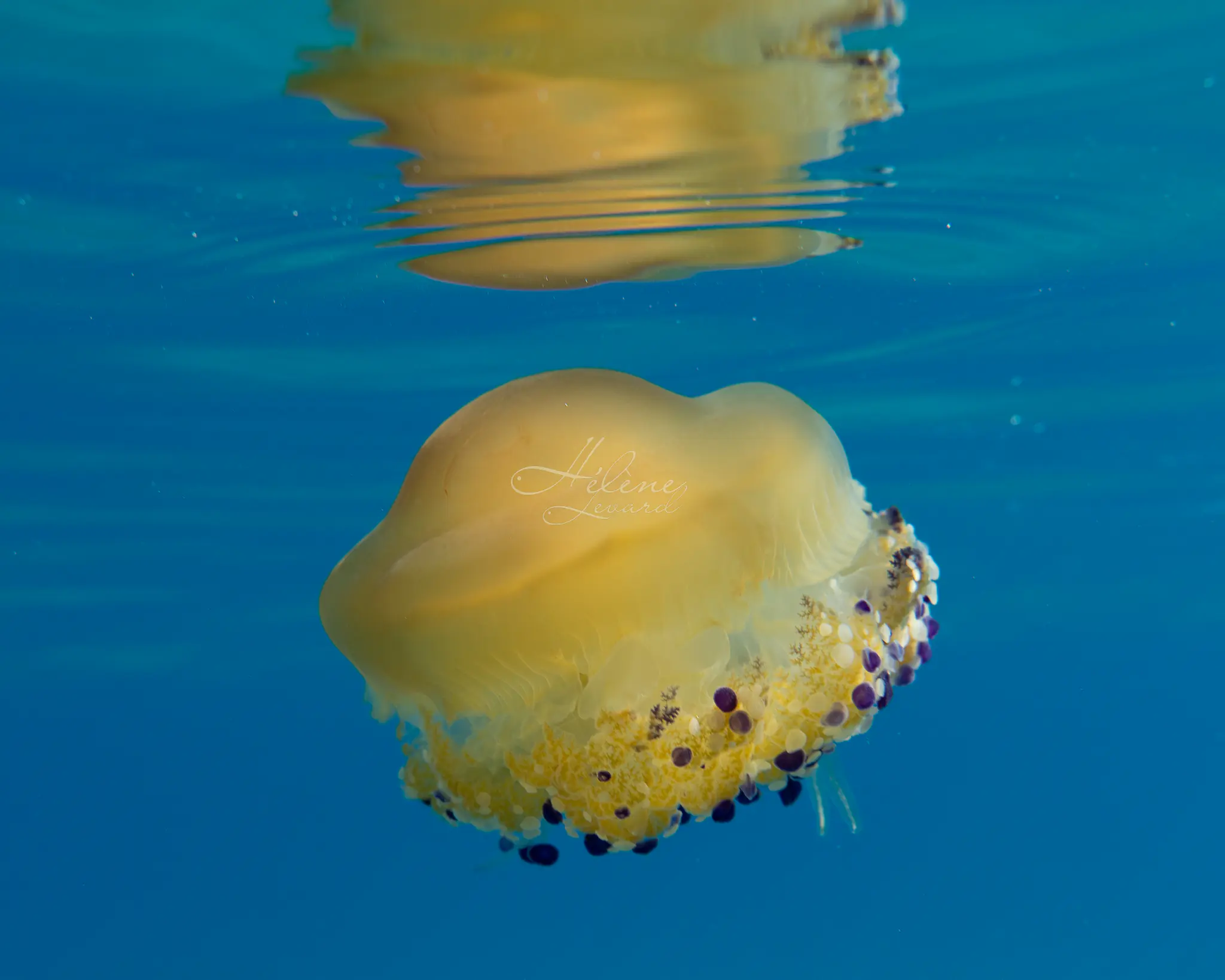
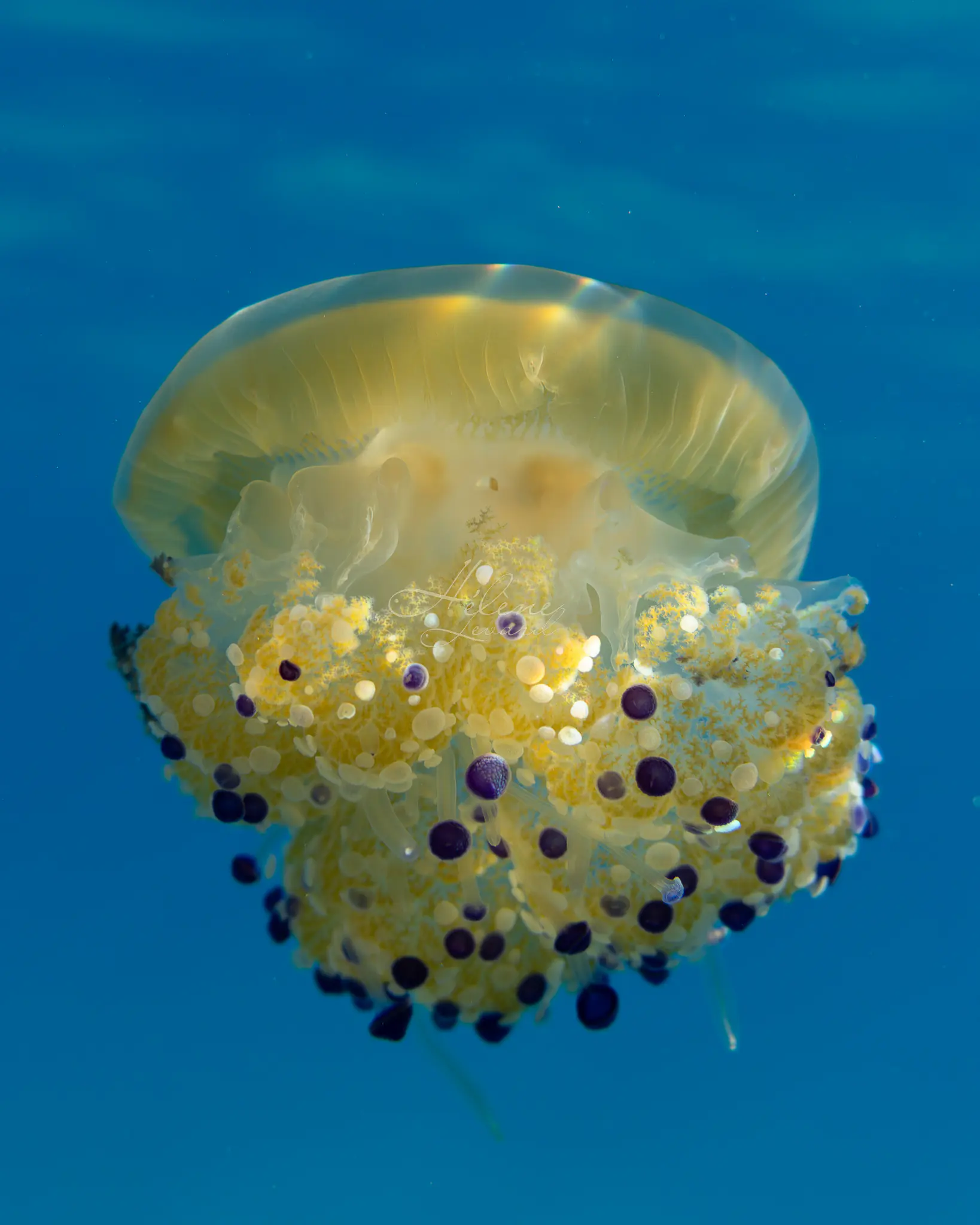
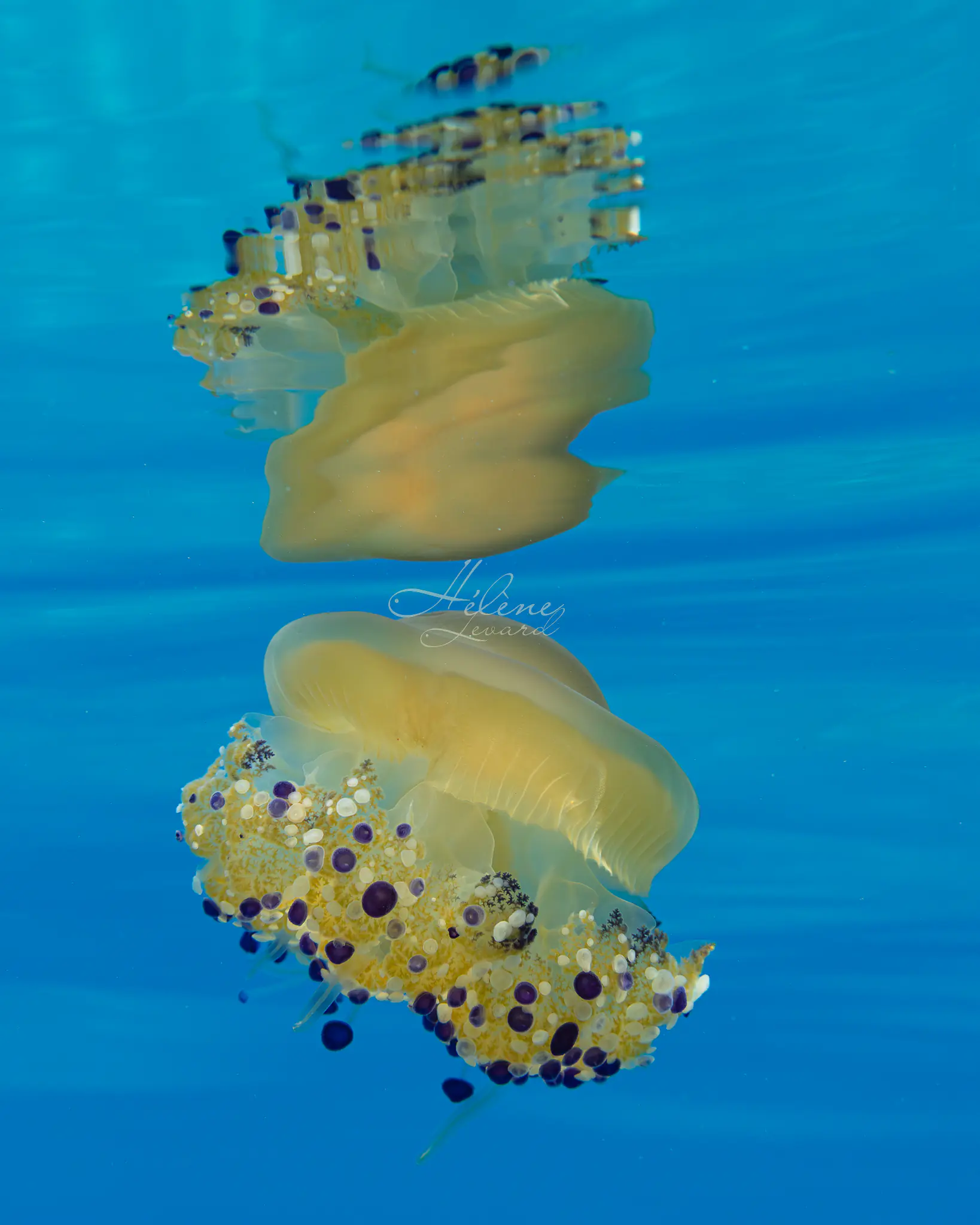
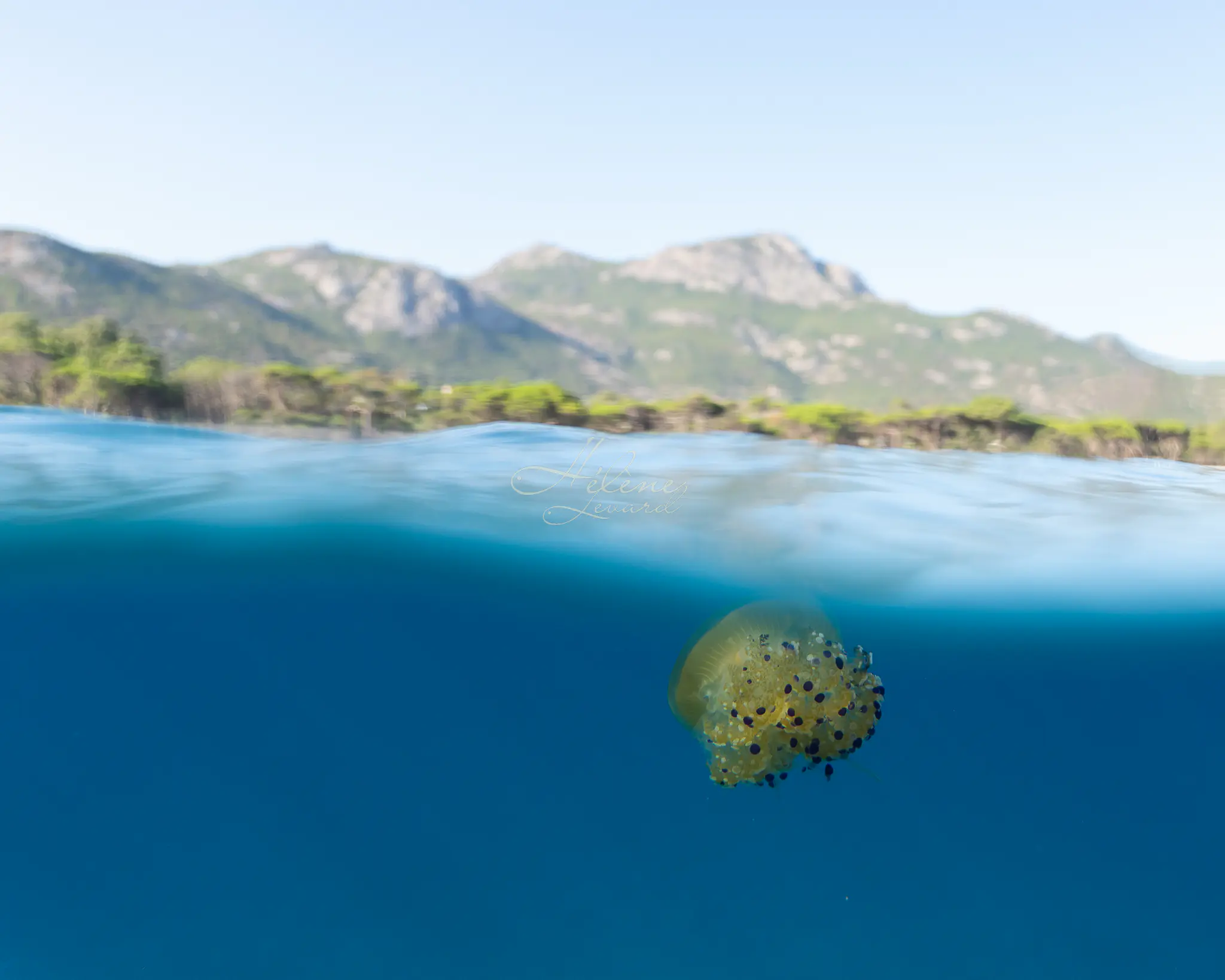
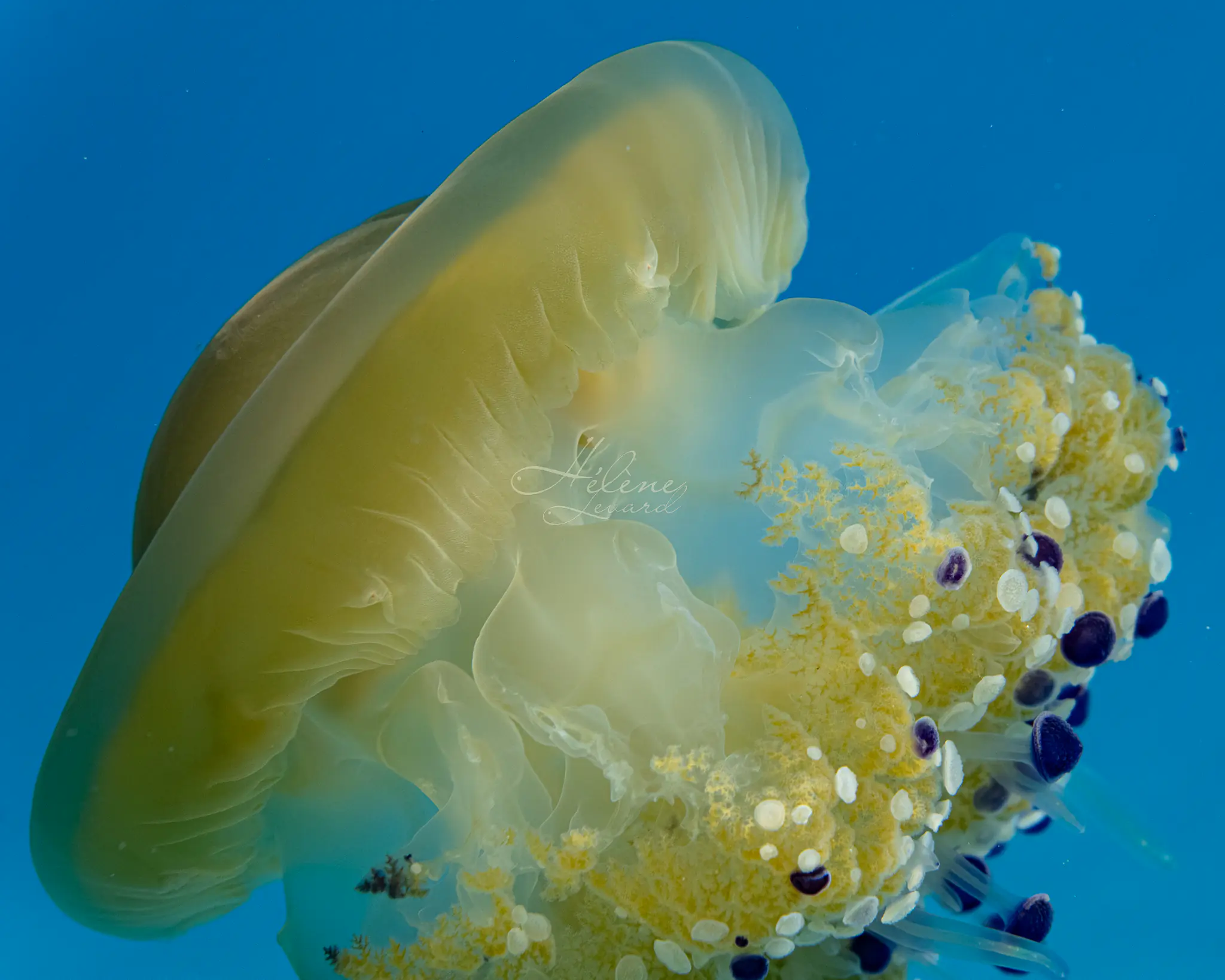
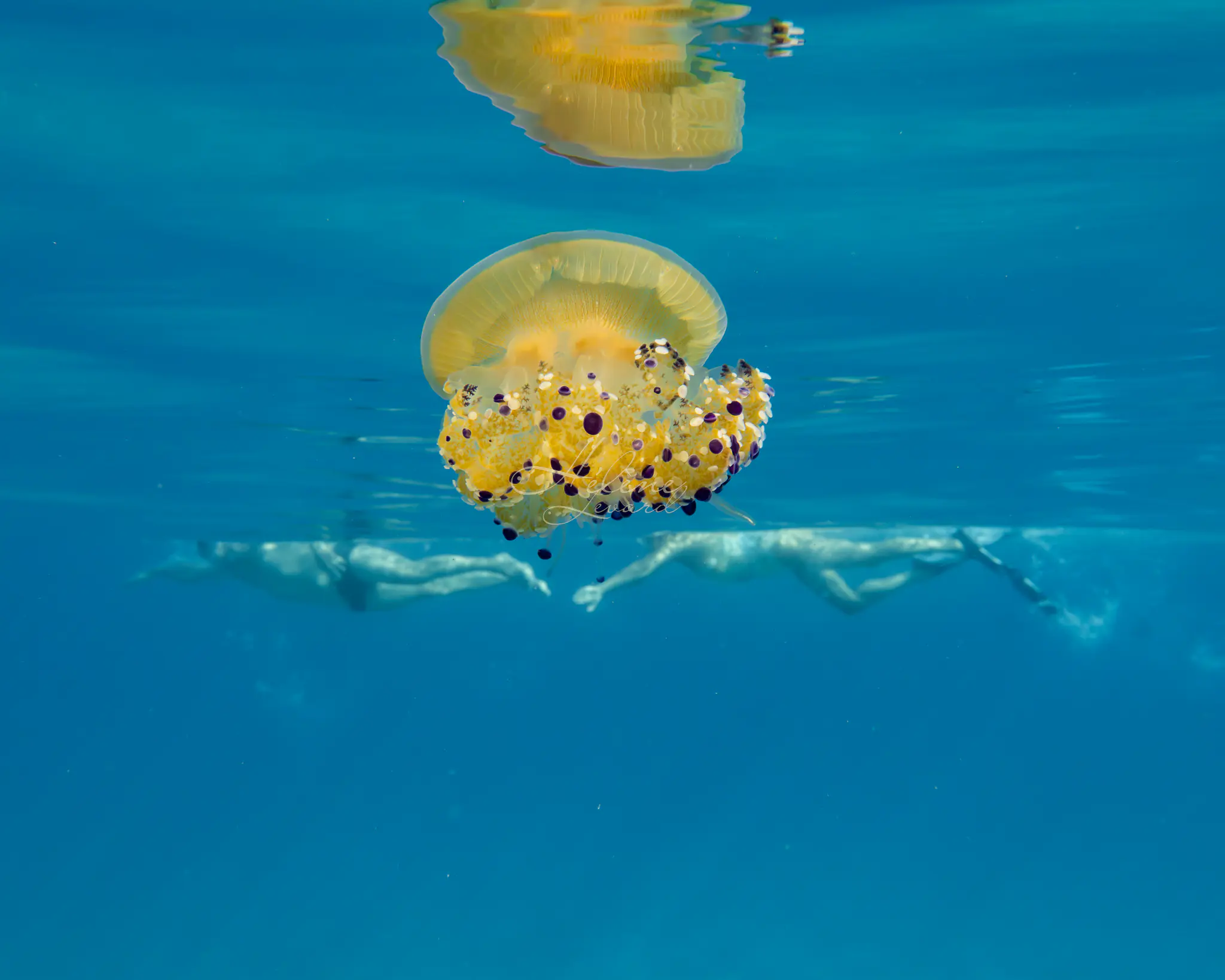
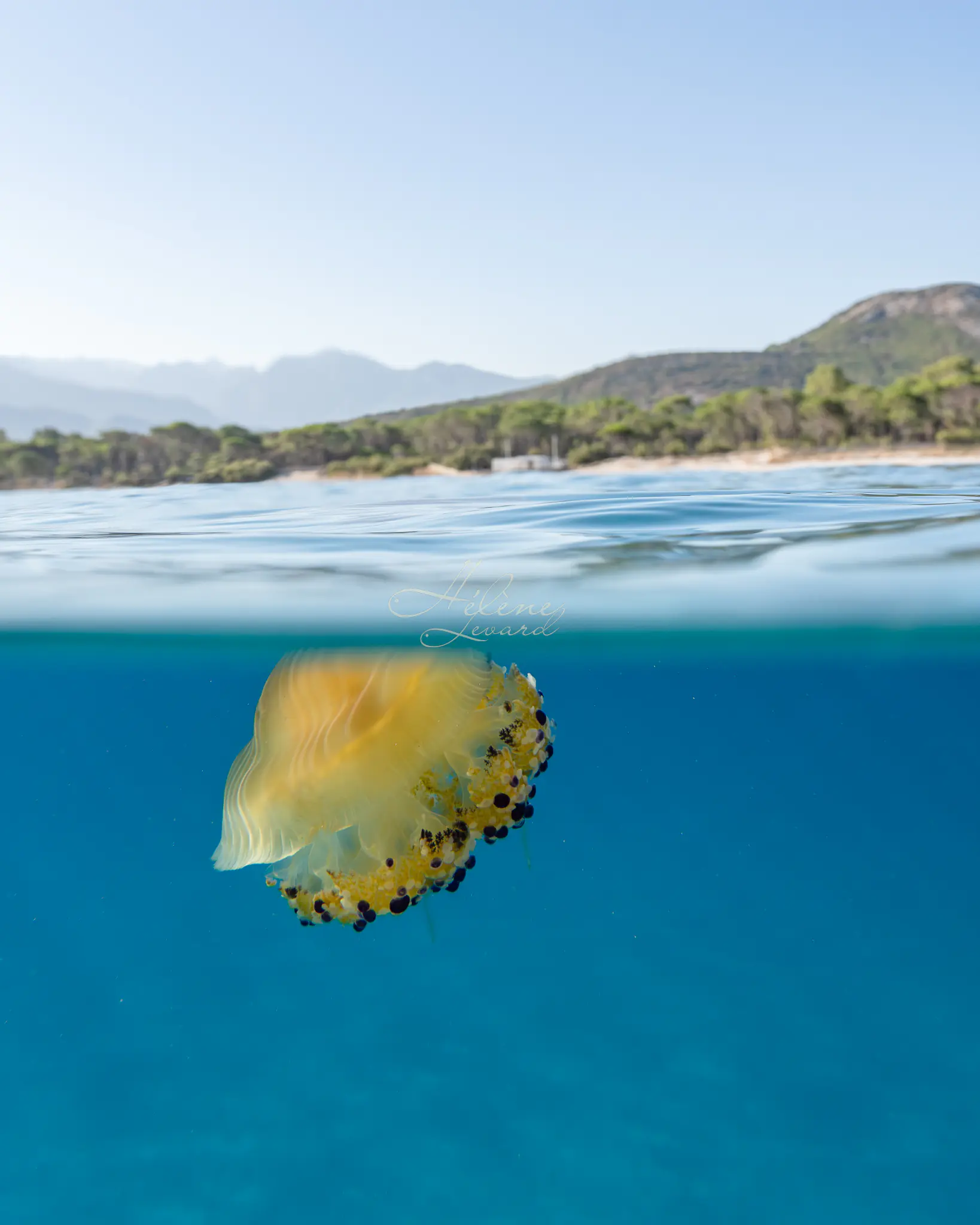
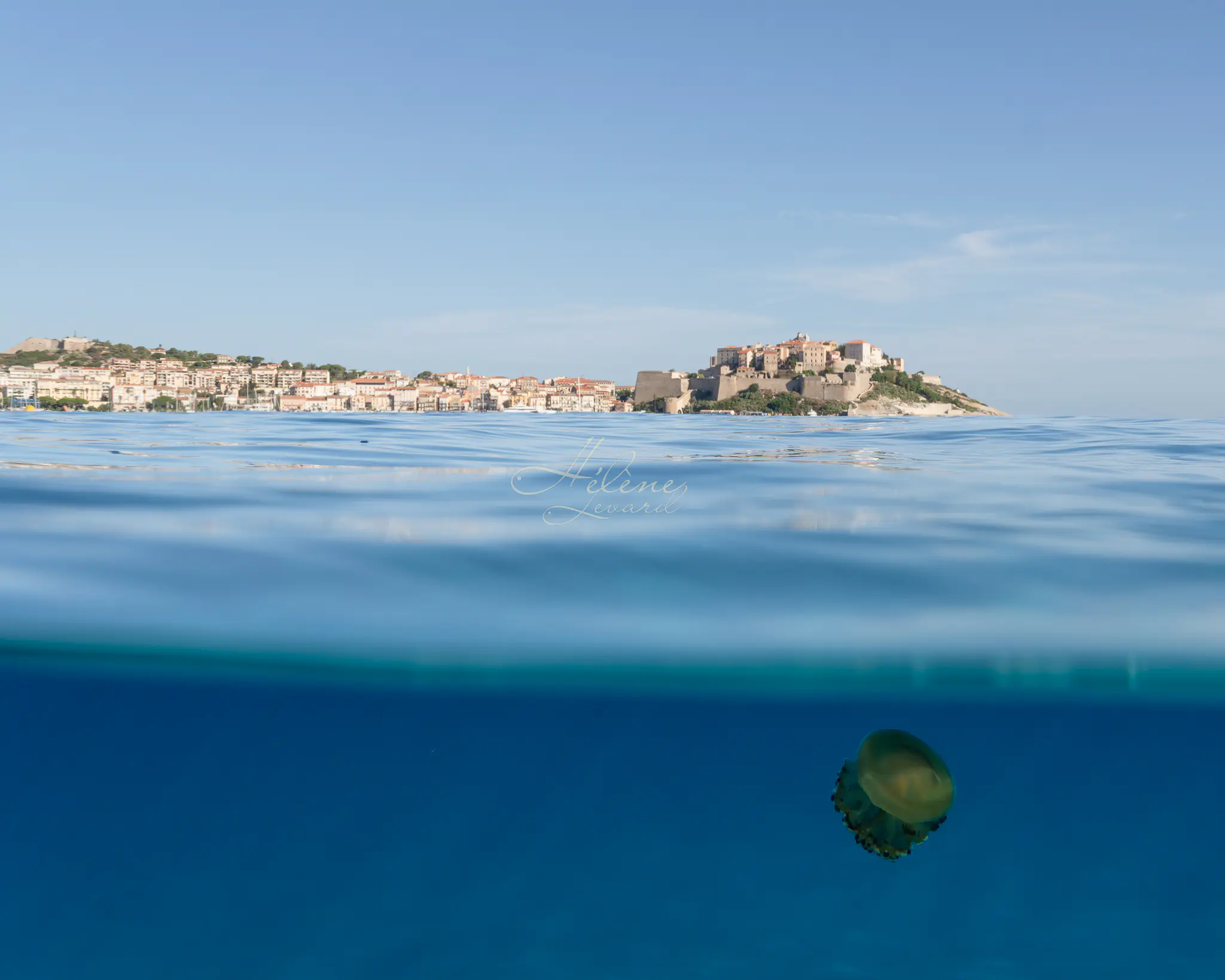
What is wonderful about fried egg jellyfish, for a photographer, is that they drift slowly.
Hélène Levard
A ballet of fried egg jellyfish
Two weeks later, after several days of wind in the bay, I checked the Meduseo app, as I often do. A jellyfish had been spotted on Calvi beach. I got my gear ready and went back.
This time it was exceptional. I saw one, then two, then three, four, five, six. They were all different. Some had longer arms than others, and some already bore nibble marks. Some drifted alone, and others travelled with a passenger, sometimes several.
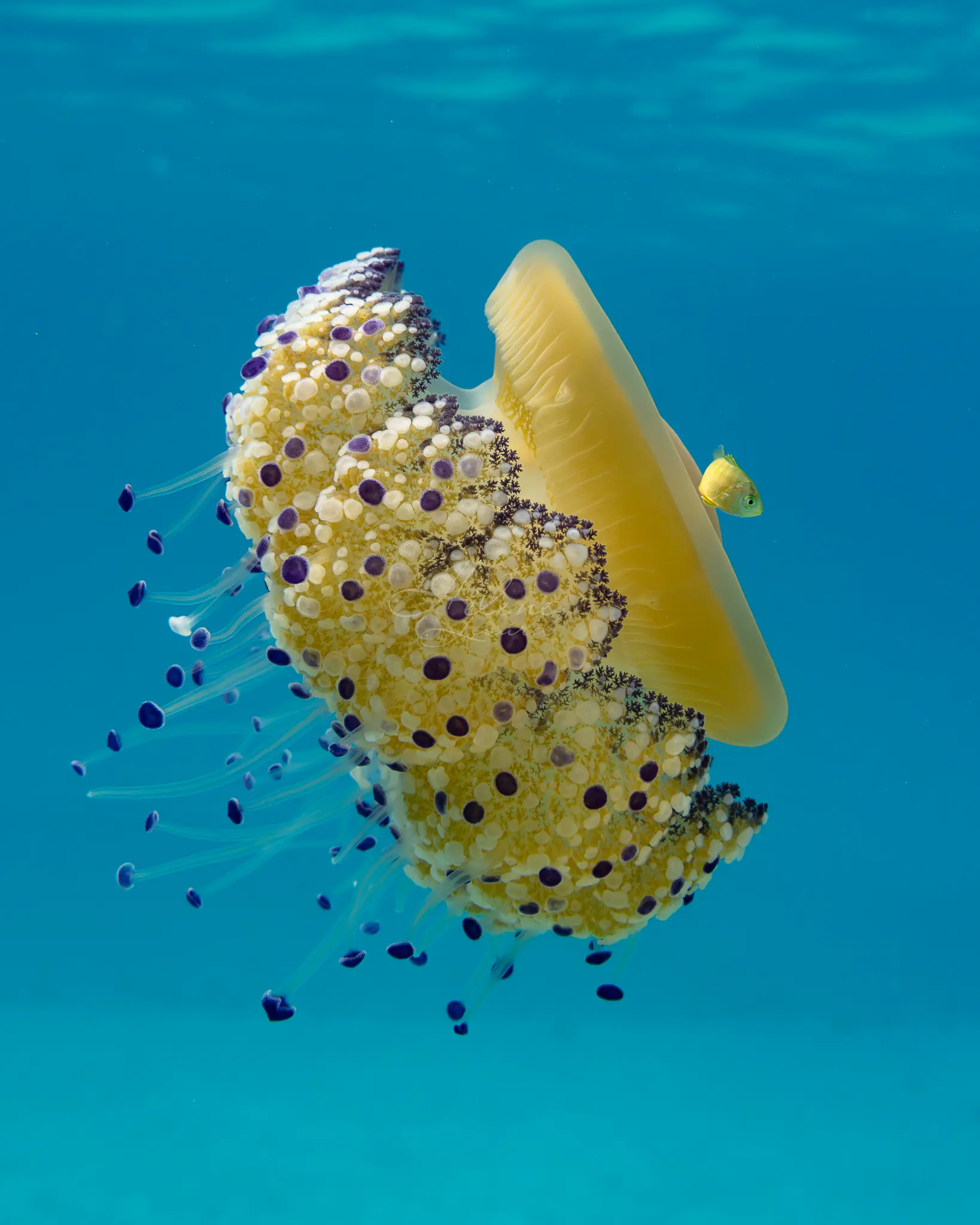
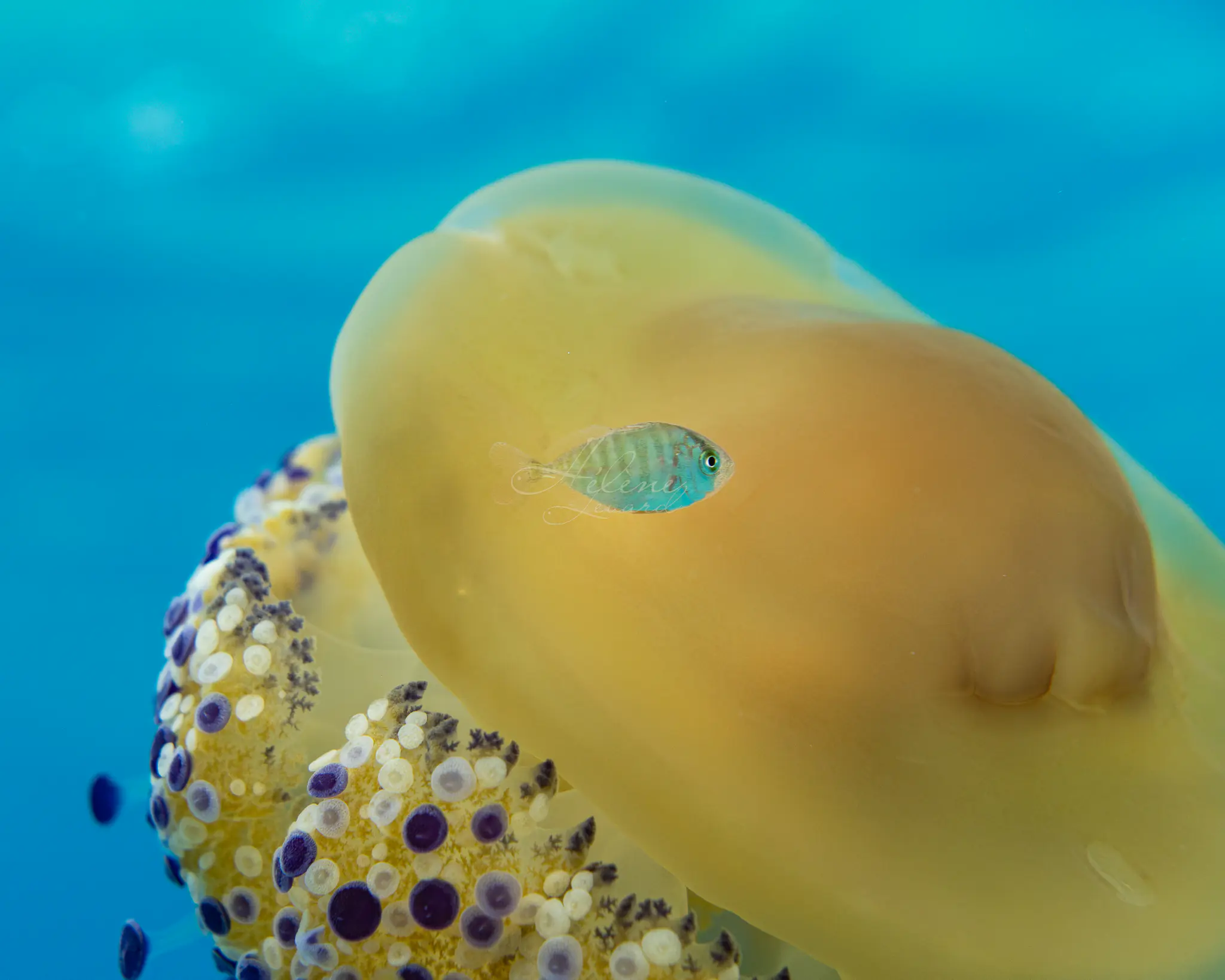
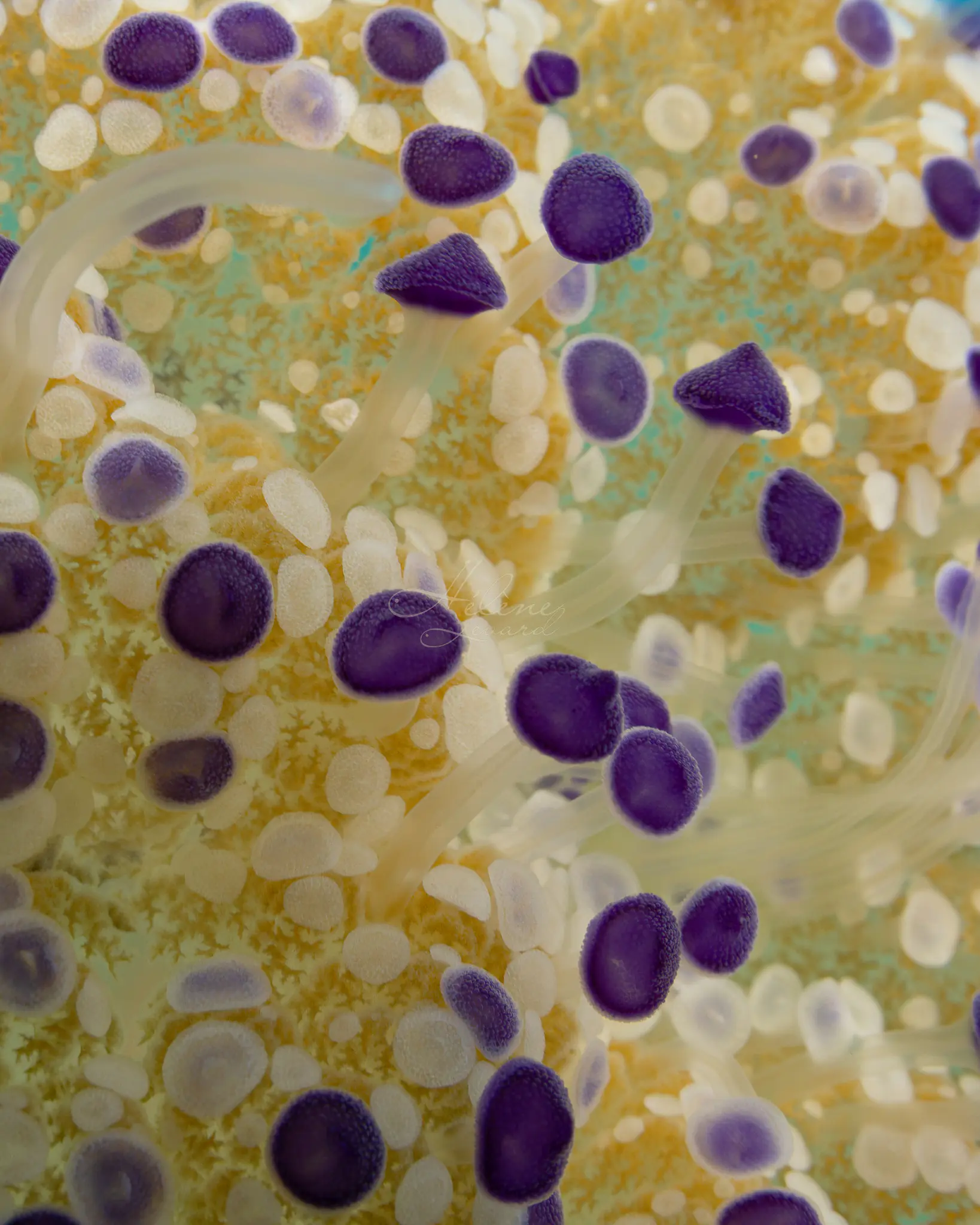
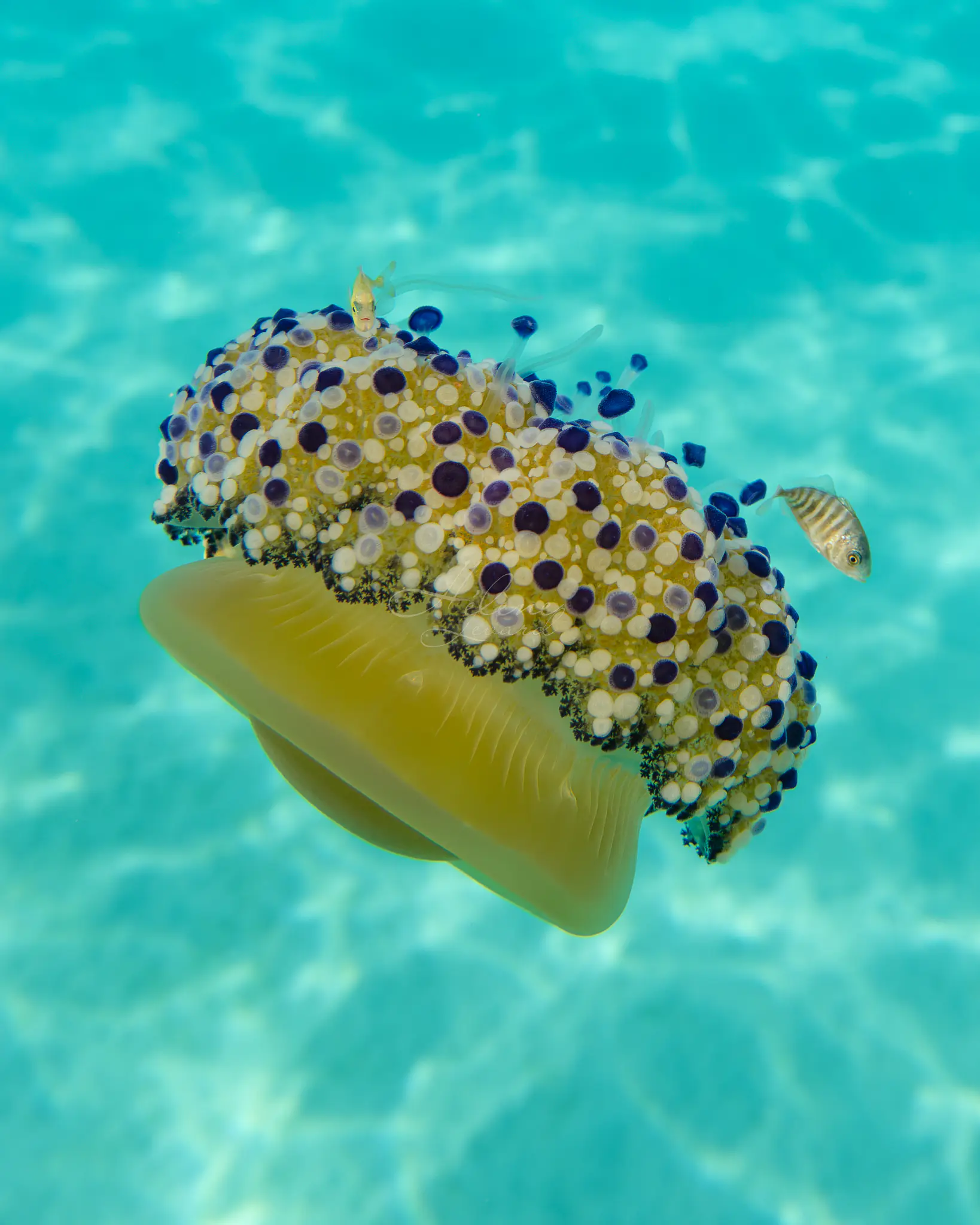
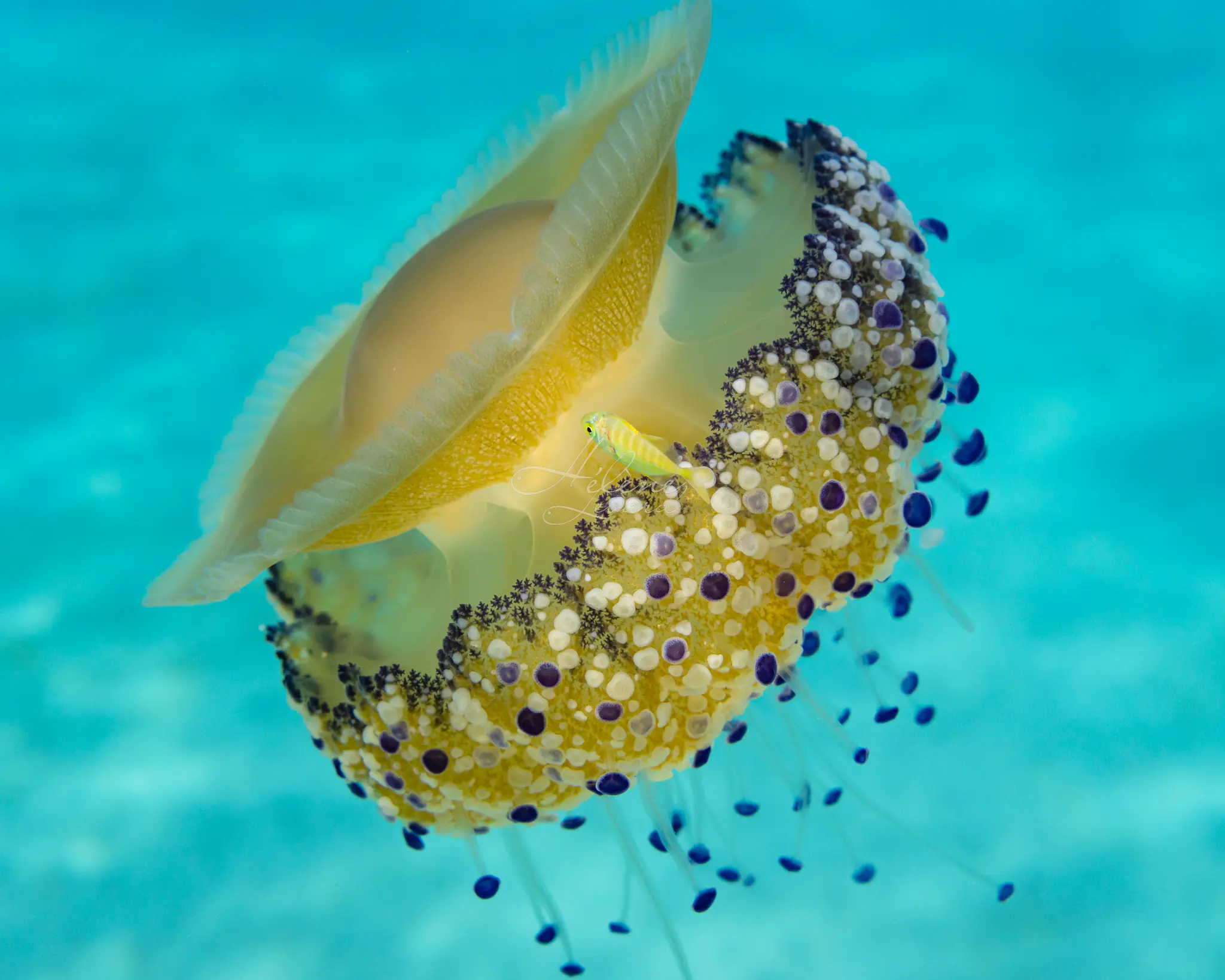
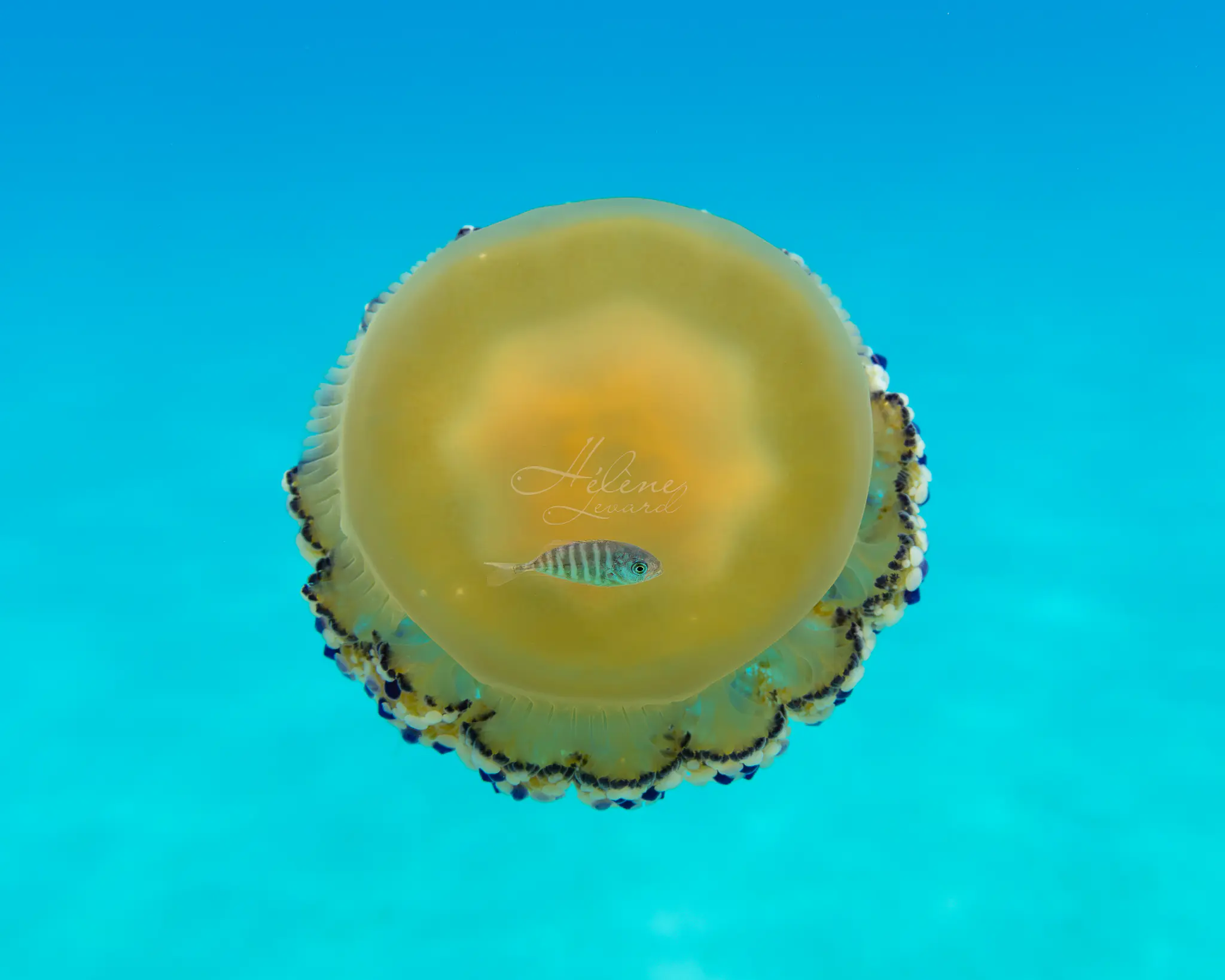
Fried egg jellyfish in the bay of Calvi, Corsica.
A couple on a paddle board passed by me and asked what those big yellow circles in the water were. I explained that they were harmless jellyfish and offered to let them take a closer look with my mask. The young woman put her head underwater from her paddle board. She came back up, surprised: it is beautiful! Then they went on their way.
I came home with hundreds of images. It took me more than a month to sort through them all.
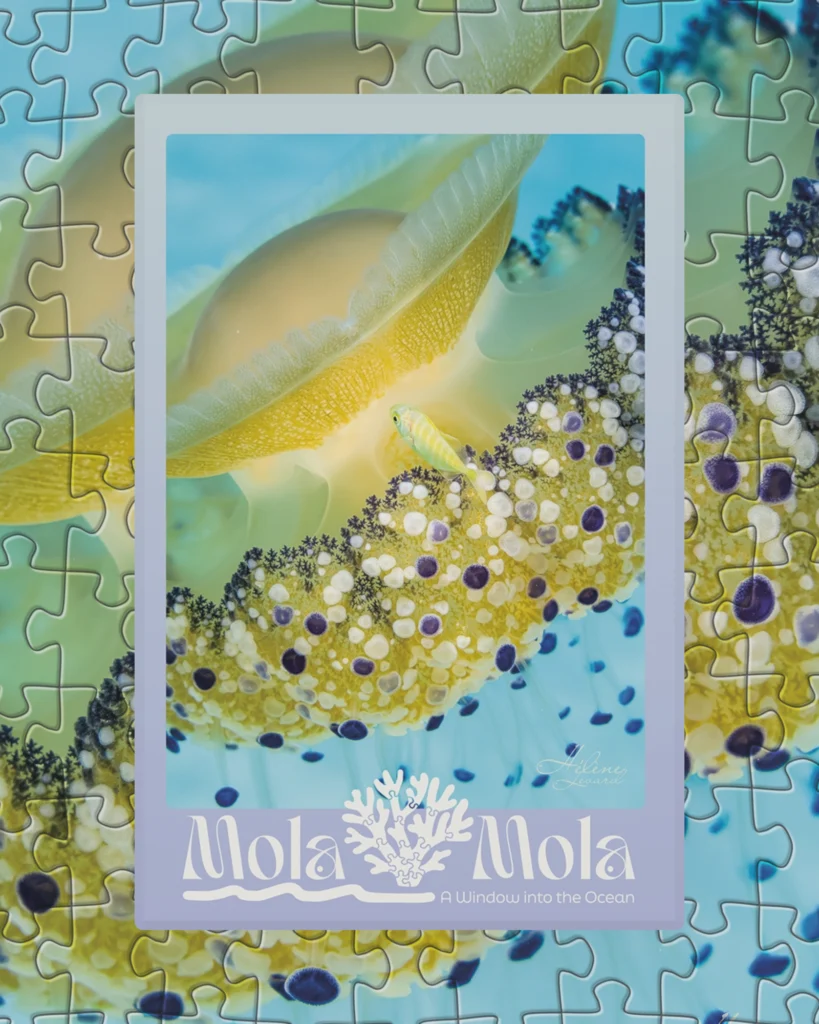
The puzzle made from this photograph
Among them, I looked for a photograph that would show both the details of the jellyfish’s anatomy and the life around it, in a 5:7 format.
That is how the puzzle Safe Place was born.
99 pieces
The little story written on the back of the box is yours to discover.
The species
Fried egg jellyfish: characteristics and observations in the Mediterranean
Cotylorhiza tuberculata
Scientific name
Cotylorhiza tuberculata
Family
Cepheidae
Distribution
Mediterranean basin
For humans
Harmless
What is the scientific name of the fried egg jellyfish?
The fried egg jellyfish has the scientific name Cotylorhiza tuberculata. This Mediterranean jellyfish belongs to the family Cepheidae. It is recognisable by its distinctive bell and is generally found near the surface, particularly close to the coast in summer.
Why is it called the fried egg jellyfish?
The fried egg jellyfish owes its name to its white and yellow bell, raised at the centre by an orange-yellow protuberance reminiscent of an egg yolk. Its oral arms are short and branched, with labial palps whose tips are often purple to white.
Where can you see the fried egg jellyfish in Corsica and the Mediterranean?
The fried egg jellyfish is found throughout the Mediterranean basin. It generally swims near the surface and frequents coastal waters in summer. In Corsica, as elsewhere in the Mediterranean, its presence near beaches varies with environmental conditions, currents and winds. It may gather offshore or be carried toward the coast, with abundance varying from year to year.
What does the fried egg jellyfish eat?
Cotylorhiza tuberculata feeds on small planktonic particles, which it absorbs with its branched oral arms. It also hosts symbiotic microscopic algae in its tissues, called zooxanthellae. Through photosynthesis, these algae contribute to its energy intake.
Is the fried egg jellyfish dangerous to humans?
According to the DORIS-FFESSM species sheet, the fried egg jellyfish is considered harmless to humans. As with every species you meet underwater, it is important not to handle it, out of respect for its wellbeing and its environment.
Which juvenile fish can be found with the fried egg jellyfish?
The bell of the fried egg jellyfish often serves as a shelter for small fish. DORIS notably mentions bogue (Boops boops), amberjacks (Seriola sp.) and horse mackerels, including the Atlantic horse mackerel (Trachurus trachurus).
These young fish may stay under the bell or near the oral arms, where they find relative protection from predators.
How can you spot fried egg jellyfish in Corsica?
Two tools can help you prepare your observations:
Meduseo
Meduseo lets you view jellyfish reports on beaches and identify areas where they have recently been seen. The information depends on available data and does not guarantee their presence at the time of your visit.
Windfinder
Windfinder lets you check wind forecasts, notably direction and strength. This data can help you understand the conditions likely to push jellyfish toward the coast. However, wind cannot precisely predict where they will be.
Cross-checking recent sightings with wind conditions can help you choose where to look for jellyfish in Corsica. Their presence nevertheless remains variable and depends on several factors.
Learn more about the fried egg jellyfish
To deepen your knowledge of Cotylorhiza tuberculata, see the DORIS-FFESSM reference naturalist sheet on the fried egg jellyfish.
All sea stories